Ministry of Time | Book Review
The Ministry of Time by Kaliane Bradley came out in 2024 and somehow didn’t land in my orbit until last month when I heard someone rave about it on a podcast — and I am so grateful. (As an aside, there are just so many ways books find you, and that serendipity continues to amaze me!)
True to my usual practice, I went into book completely blind. No summary, no reviews, no idea who the protagonist or the author was, I just downloaded it to my Kindle and started reading and then immediately re-read as soon as I finished!
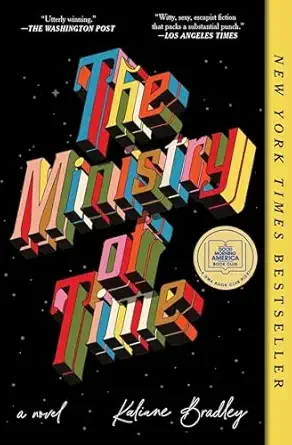
The Premise
The Ministry of Time’s premise is rooted in a real historical figure — Graham Gore, a Victorian polar explorer lost in the Arctic — who comes through a time-travel door operated by the UK Ministry of Time into the 21st century. The Ministry pulls people through from various points in history as an experiment and then assigns each “expat” a bridge: a handler/spy charged with helping them navigate the transition, assimilate into the 21st century and monitor them 24/7.
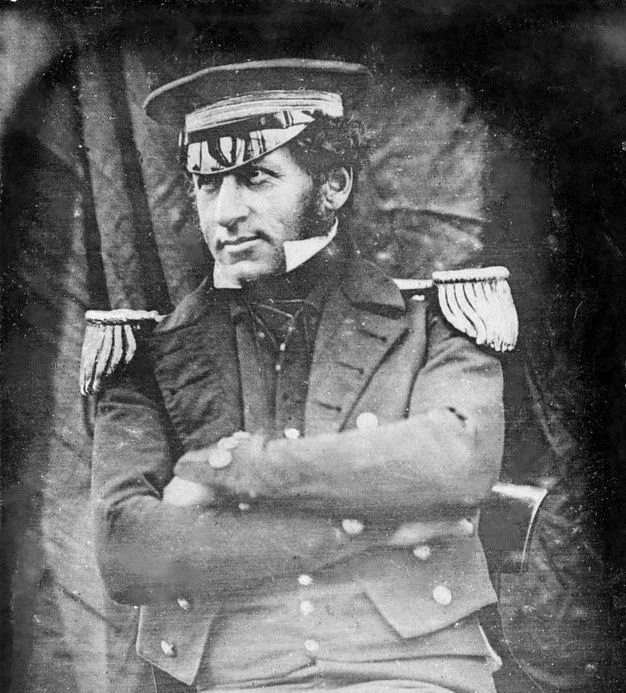
The real life Victorian polar explorer, Graham Gore, on which the book is based. (I promise, he is sexy!)
The female unnamed narrator is Graham Gore’s bridge. She is Cambodian-British, fiercely ambitious and determined to prove herself within this bureaucratic institution (which I imagined to be very MI5 a la Slow Horses).
The plot itself is a masterclass. Twists I didn’t see coming, secrets and reveals that reframe everything you thought you understood and force you to go back and read it again. The whole novel was propulsive in the best sense. Every night, I kept telling myself one more chapter. . . and thusly, my Oura sleep scores were on the lower end of “Good” for a week but it was worth the sacrifice!
The Structure
The novel’s structure alternates between third-person Graham Gore chapters (numbered in roman numerals) and first-person the female bridge chapters (in Arabic numerals). I loved, as a reader, getting two full interiorities, two ways of experiencing the same collision of the characters. And as a writer, I took careful notes of how the author moved the story forward via the two POVs, and how the overall structure is quite circular, leading to the urge to read it again upon finishing.
Genre Mash-Up and Tone
The genre is basically everything: it’s time travel and climate fiction and a spy thriller and a workplace comedy and a super sexy romance. It’s magical realism and sci-fi and futuristic and very-now. It is deeply, unexpectedly funny, and then in the very next breath, serious and profound, and it is weird AF. I loved it.
Time travel is simply treated as a fact with no technical justifications, which frees up the brain space for everything else: the workplace drama and the protagonist’s pure ambition to succeed in the (near-future) UK Ministry, the buddy comedy energy of the other time travelers from across history trying to acclimate to the present, and the adventure tale based on a real-life polar expedition.
The through-line that holds these disparate subplots together is the humor. The funniest scenes are when the expats get together and try to adapt to the near-future: one uses Tinder, Graham Gore is called a DILF, they listen to Spotify. The cutthroat workplace politics and the intense female supervisor-mommy-energy also made me laugh, and very much relate. Oh, and there is sex, romance, familial love and friendship.
Not only is it funny and sexy, but also, dark. The Victorian era white male polar explorer POV (including his interactions with indigenous people and his imperialist worldview) is in contrast to the narrator’s experience as a Cambodian-British woman. Her sections flash back to how her mother’s experience as a Cambodian refugee colored every facet of her childhood, and that history (colonialism, genocide, displacement, survival, grief) is woven through the entire novel, along with the narrator’s relationship with her own identity (there is a great list of the ridiculous superficial questions asked of her, including Do you know Angelina Jolie?)
The Themes
There are many to tease out but the three that resonated most deeply with me as a reader:
First, the ambition theme runs through everything: what we want, what we’re willing to do for it, who we become in the getting. This is, of course, one of my favorite things to think about and it is rare to find great female-work-ambition novels out there in the world (which is why I wrote one).
Next, the book’s examination of power, imperialism, and what governments owe the individuals across time and geography is relentless and more than a little tied to climate change. Because it’s obvious the author was having FUN writing this book, none of these darker themes comes across self-serious or didactic but digestible and resonant when coupled with DILF jokes and hot sex. To me, this is the best tone one could achieve when transmitting the most serious of topics.
Finally, there is the concept that has stayed with me longest: hereness and thereness. The author develops this as a framework for the time travelers as a way of describing the physiological, temporal and existential challenge of keeping your soul coherent across a rupture in time. But it applies just as cleanly to anyone who has ever been a refugee, or left a country behind, or lost a family, or simply had to start over and build a life in a place that doesn’t yet know who you are.
I’m still pondering this hereness and thereness, and how it applies to any rupture and reinvention. And relatedly: how time is circular and recurrent, polychronic though tending toward the historical inevitability of repetition, each soul on a non-linear and interconnected journey. This very much appeals to my little Buddhist heart.
Reading as a Writer: What I’m Taking Away
After I finished, I immediately went back to the beginning and started to re-read. I was struck by how smart the author assumes her readers are and her confidence in their ability to hold multiple disparate things together.
Then I read some reviews (something I rarely do, but I was a little confused on the ending so needed some crowdsourcing). One thing that stunned me: many people criticized the novel for its SAT vocabulary! I admit, I clicked my Kindle dictionary at least three times a chapter but I loved it. Others found the density of metaphors exhausting; I found it intoxicating.
All of this led to the great and persistent takeaway of my study of writing (and all art): everything is a matter of taste, and of timing, and of where you are in your life when a book (or other art) finds you. As a writer, you cannot engineer any of this in your readers. You just write the story you need to write and, like Bradley, hopefully have fun doing it!
This one found me at exactly the right moment and I enthusiastically give it five stars. If the time travel, vocabulary or the literary language sounds like friction to you, try it and see - you might love it! And if it sounds like a cornucopian feast of all the things that make reading so magical: pick this one up, please, and let me know what you think.