Three Manuscripts, One Question
I thought writing a novel would be like writing a legal brief. Three manuscripts in, my BigLaw brain has finally surrendered to the magic!
Last week, I sent draft six of my third manuscript to my first-round beta readers!
Long-time readers might recall I waited until Draft 12+ to share my last manuscript with beta readers. This felt like progress to let go of it sooner, a mix of relief (finally this story will live inside other people’s heads!) and grief (I miss it already).
Emerging from my writing cave gave me the chance to reflect on how this one felt so different than the prior two, but at the end of the day, I’m exploring the same themes over and over. Based on the books I read last month (more below), it turns out this is pretty normal!
My manuscripts are each different, of course. The premises vary, as do the characters, their flaws, the settings, the villains, etc. but all three manuscripts explore the same overarching theme/question: how do ambitious women navigate the push-pull of power and self-sacrifice in an era desperate for more female badasses? And naturally all three manuscripts feature the healing love of animals, work friendships, mothers and daughters, shopping sprees and luxury hotels.
I did not mean for this to happen! How did a sweet little rescue dog show up in every single book?? But I think that’s the point of art: to wrestle with your core question(s) and obsessions, ideally in an entertaining, thoughtful way.
Three years of writing later, now I know that trying to wrangle the story into perfect parameters is a losing battle.
Which rather shocked me, because:
I Thought Writing A Novel Would Be Like Writing A (Really Long) Legal Brief
I really did! I loved writing briefs and legal memos, even when I was a baby associate.
The legal writing process is well-defined. Before drafting, one must identify the topics, applicable laws, strategy, arguments and counter-arguments and client goals. For example, can our animal rights pro bono client sue the US government for issuing too many permits that hurt marine mammals? If so, under what laws? What facts support the best arguments? What court should we file in? What do the court’s rules say about page limits/formatting? Etc.
Legal writing also requires rigor. It’s based on precedent (a partner’s style, prior client work, etc.) and while there’s not much creative latitude beyond strategy and style, every legal document is built to be powerful, even life-saving. Perfection is the baseline expectation.
Feedback on legal writing (when working in a law firm) is also constant! Juniors must incorporate multiple rounds of feedback from multiple senior associates and partners, all splattered with blood-red track changes which hopefully help them learn along the way. Clients weigh in too. Much collaboration is required for each and every deliverable.
Moreover, time is of the essence when legal drafting. Never did I have the option of fiddling with things until they were “perfect” or attempt experimental design choices that, if unsuitable, I could simply scrap and rewrite from scratch over and over.
As a lawyer, I had to identify the scope of the work, precisely follow the rules and make the resulting written work product perfect by the deadline, all under the constraint of billable hours, client budgets, positional conflicts and all that jazz.
That was the job.
And, if you’re lucky, after all of this: you win!
But Writing is Woo-Woo
Even if a legal brief or memo goes through multiple iterations, at its core, the drafting lawyers know what they want it to say (i.e., something convincing) and achieve (win). I assumed novel-writing was quite the same.
So before I began my first novel, I did what any BigLaw partner would do: I picked a topic/story. Identified my goal: secure a multi-book deal with a Big 5 publisher and become besties with Oprah. Obvi. I brainstormed the setting, story beats and overall themes. Made a perfectly color-coded Excel spreadsheet calculating beats and word counts. Before I began drafting, I set my own strict deadlines and a complicated rewards system for hitting word count.
I listened to every writing podcast and took every class. When I heard other writers invoke the “muse” or “source” or “magic,” I would scoff. Never did I invoke “a higher power” when drafting a memo on climate change (though I kinda wanted to)! As a lawyer, what matters is the logical, analytical, rational way of thinking, baked in during law school and refined over years of practice.
All the while, I reasoned if I have the most efficient and rational process, leverage the most sophisticated tools and make everything 100% perfect, the path to publication will be easy. Zero stress, unlike lawyering, and what is there to be anxious about? A few drafts and some line editing. Done and done.
Ha ha ha! Silly me!
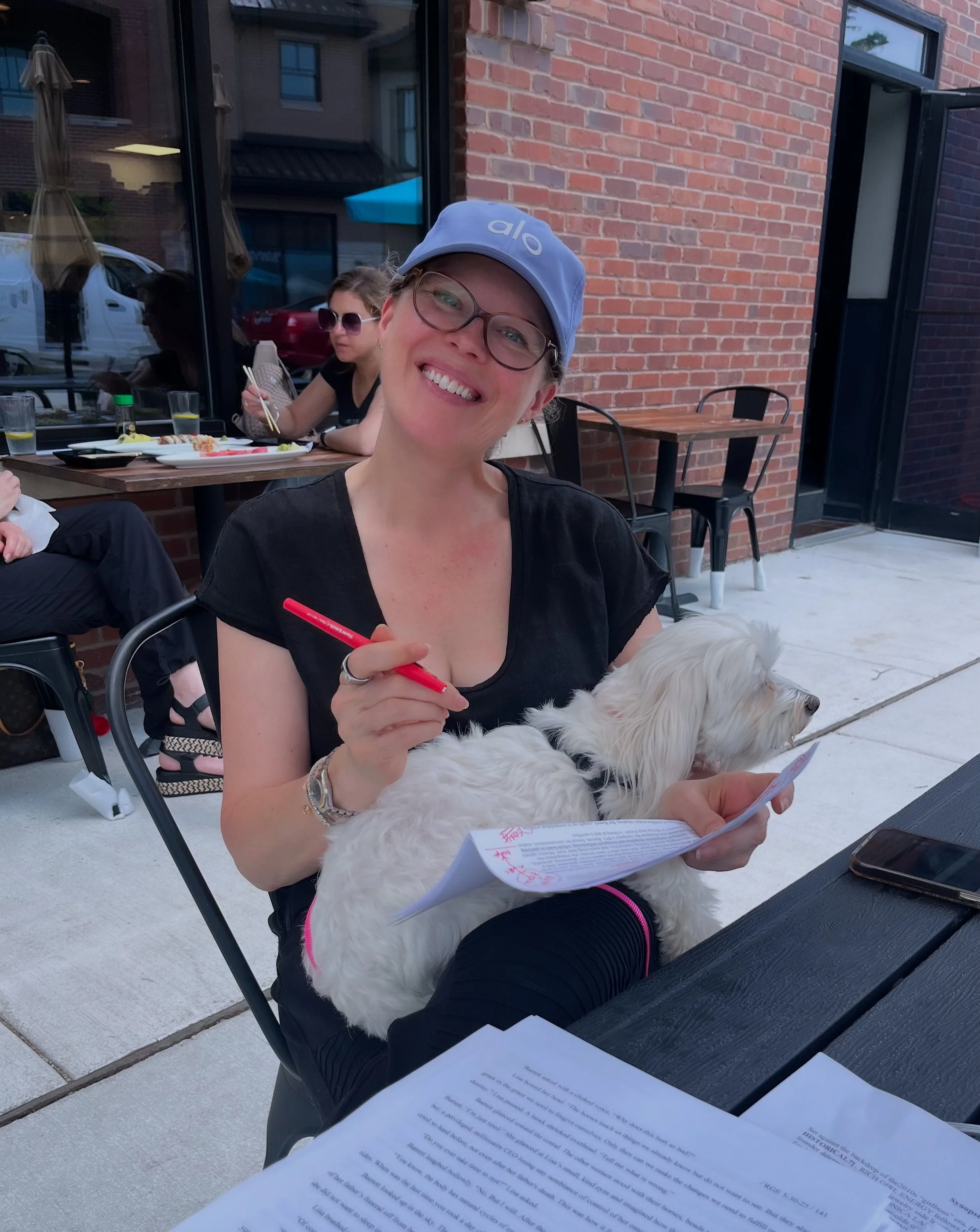
My co-writer Gracie doesn’t give me a lot of feedback but she’s very cuddly
Three manuscripts in, I’ve figured out my writing process (more on that in a future post!), but process is not quality, of course. I’m still surprised by the fact I have no idea how my drafts will turn out and subconsciously, I keep exploring the same themes.
No matter how hard I try to wrangle my brain, there is an element of magic in creative writing. Ideas just seem to find me, often in my dreams, and my fingers autonomously type crazy scenes and characters!
The other huge difference between novel-writing and legal writing is you can revise a novel literally forever. Unless you have an editor/book deal/other contractual deadlines (and probably not always even then), you can take your time when working on a novel.
Some of my favorite authors spent 10+ years on a single novel!
I honestly have no idea where so many parts of my books came from, and thus, any future criticism simply cannot be taken personally. It’s like an avatar of me and an avatar of the reader will one day get together and make a totally different movie in their head that I cannot control. They might like it; they might not. Really, it’s not my business.
Leaning in to this magic spark makes writing infinitely more enjoyable than legal writing. And confusing, as effort + perfectionism does not equal a publishing deal or a clear-cut “win.” Subjective taste and art do not make for reliable outcomes. And that’s okay, too. Process never equals outcomes, not even in law.
(Side note: if you want to go deep with writing and magic and creativity and spirituality and Buddhism and art and craft and anxiety—all of my favorite things!—I highly recommend this Rick Rubin & George Saunders podcast!)
Reading as a Writer: Same-Author Pairs
This brings me back to the realization that no matter how hard I try to lawyer the job of novelist, I’m still grappling with the same essential themes despite intending to write totally different stories. And when I read more than one book by the same author, I realize: that’s okay!
Last month, I read eight books and three of them were back-to-back same-author pairs (which is unusual for me). This way of reading makes the author’s “obsession” obvious.
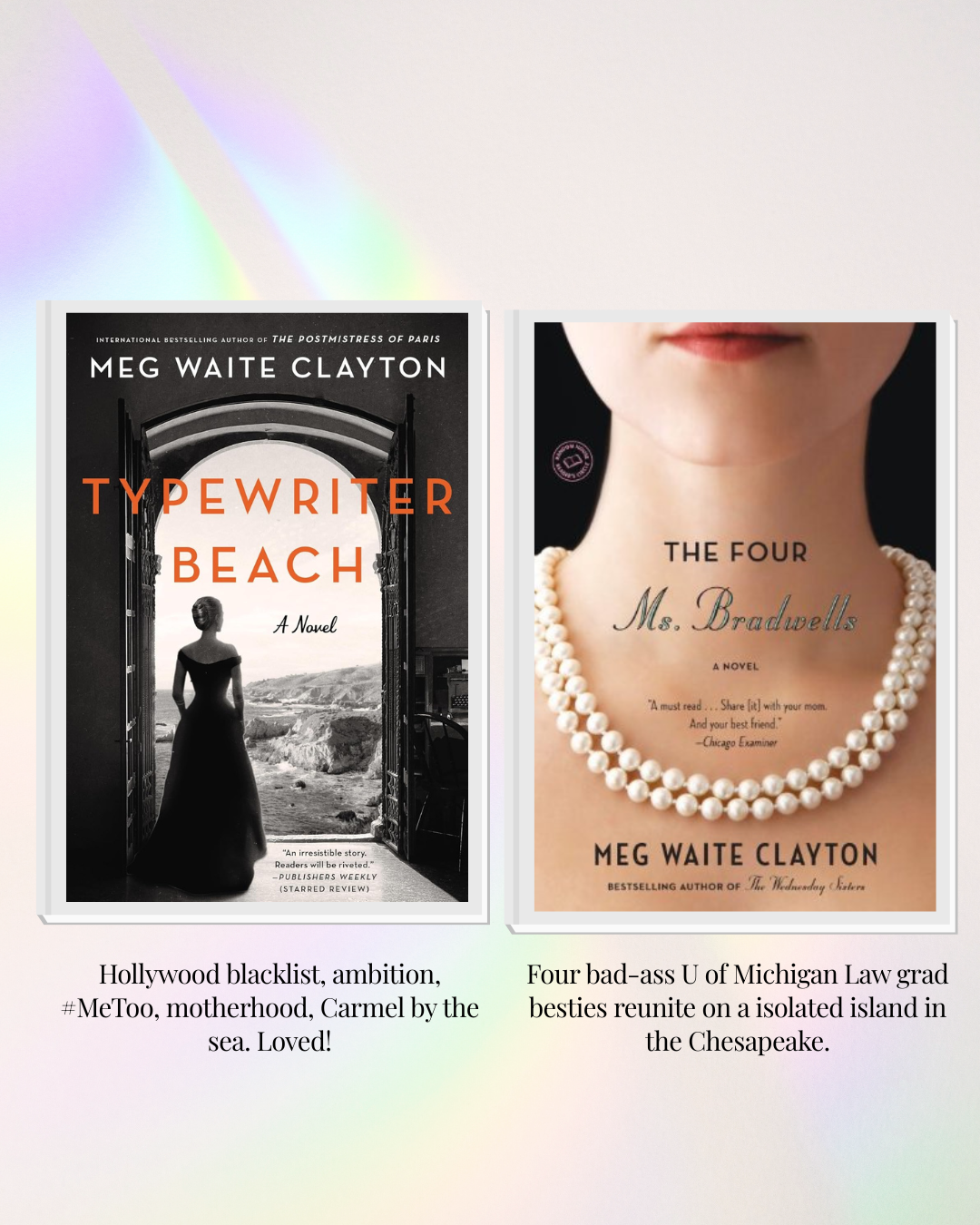
With Meg Waite Clayton (The Four Ms. Bradwells, Typewriter Beach), it’s about ambitious women paying the price for their courage. (Side note: Meg is a fellow Michigan Law and Latham & Watkins alum! The Four Ms. Bradwells is about four U of M Law besties and Typewriter Beach features a sweet little puppy, so obvi these works are dear to my heart!)
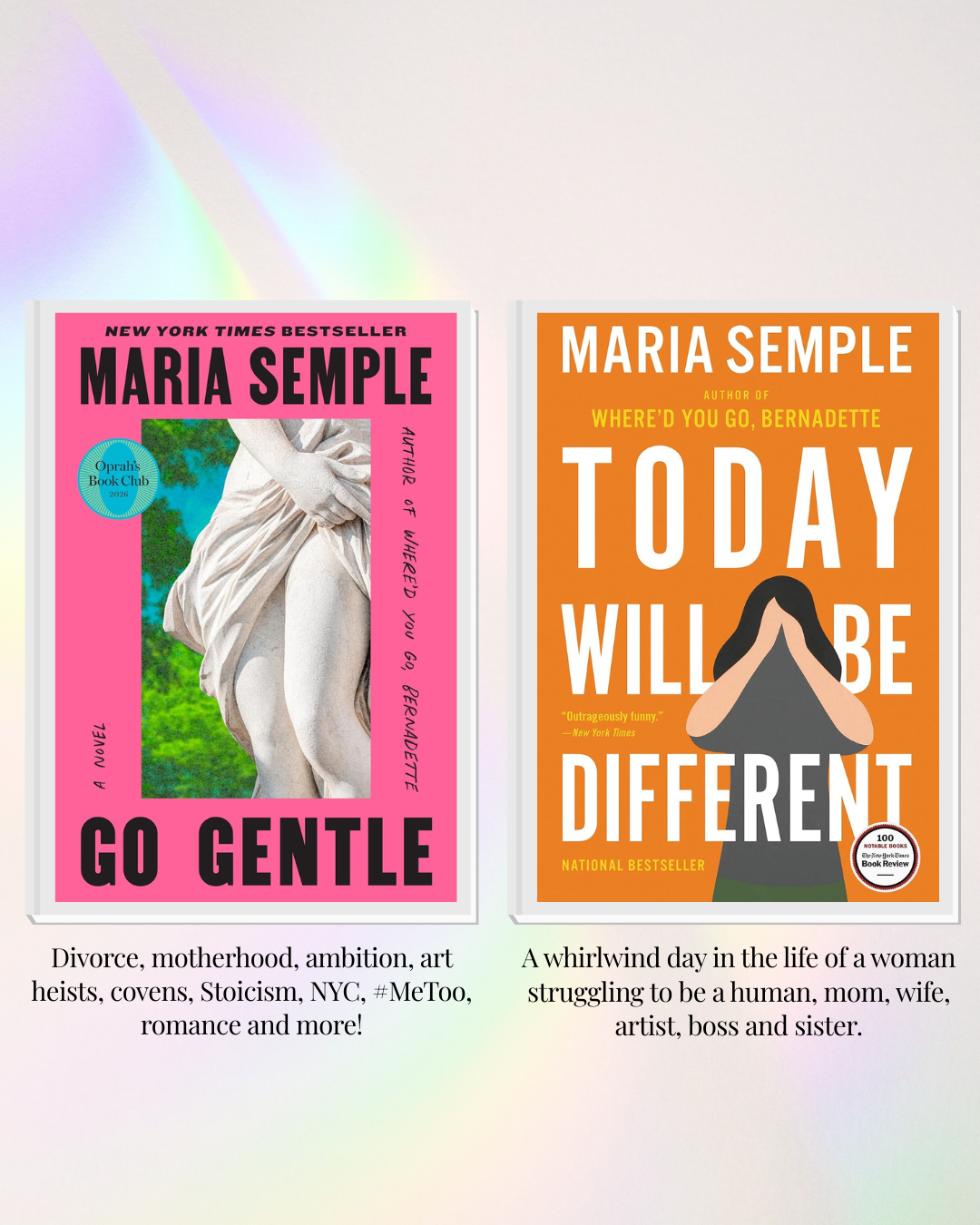
With Maria Semple (Today Will Be Different, Go Gentle), it’s the woman who frenetically struggles with life and tries to make the best of it via humor and love.
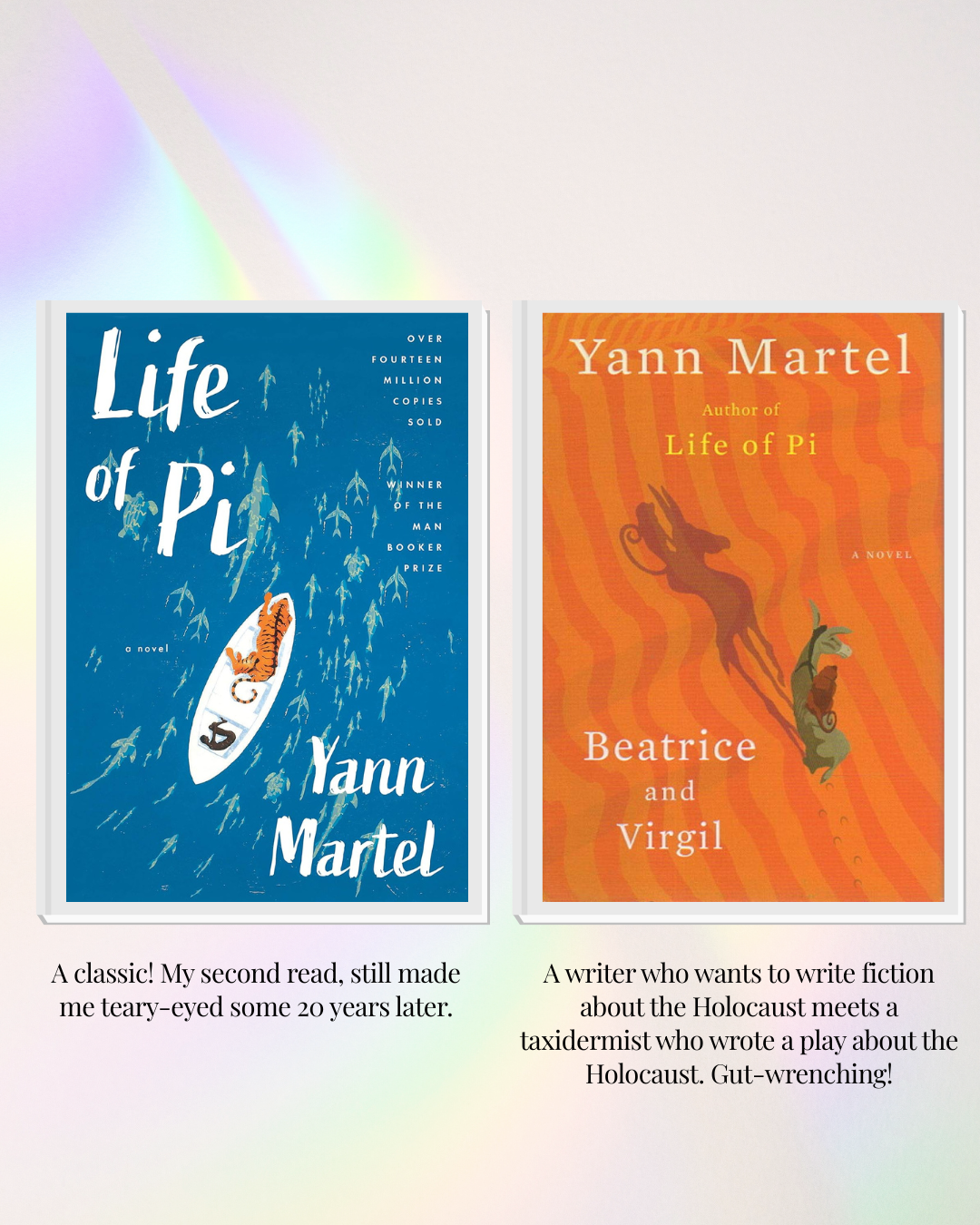
With Yann Martel (Life of Pi reread, Beatrice & Virgil), it’s faith and suffering and the stories we build around painful events (e.g., the Holocaust) to make them survivable.
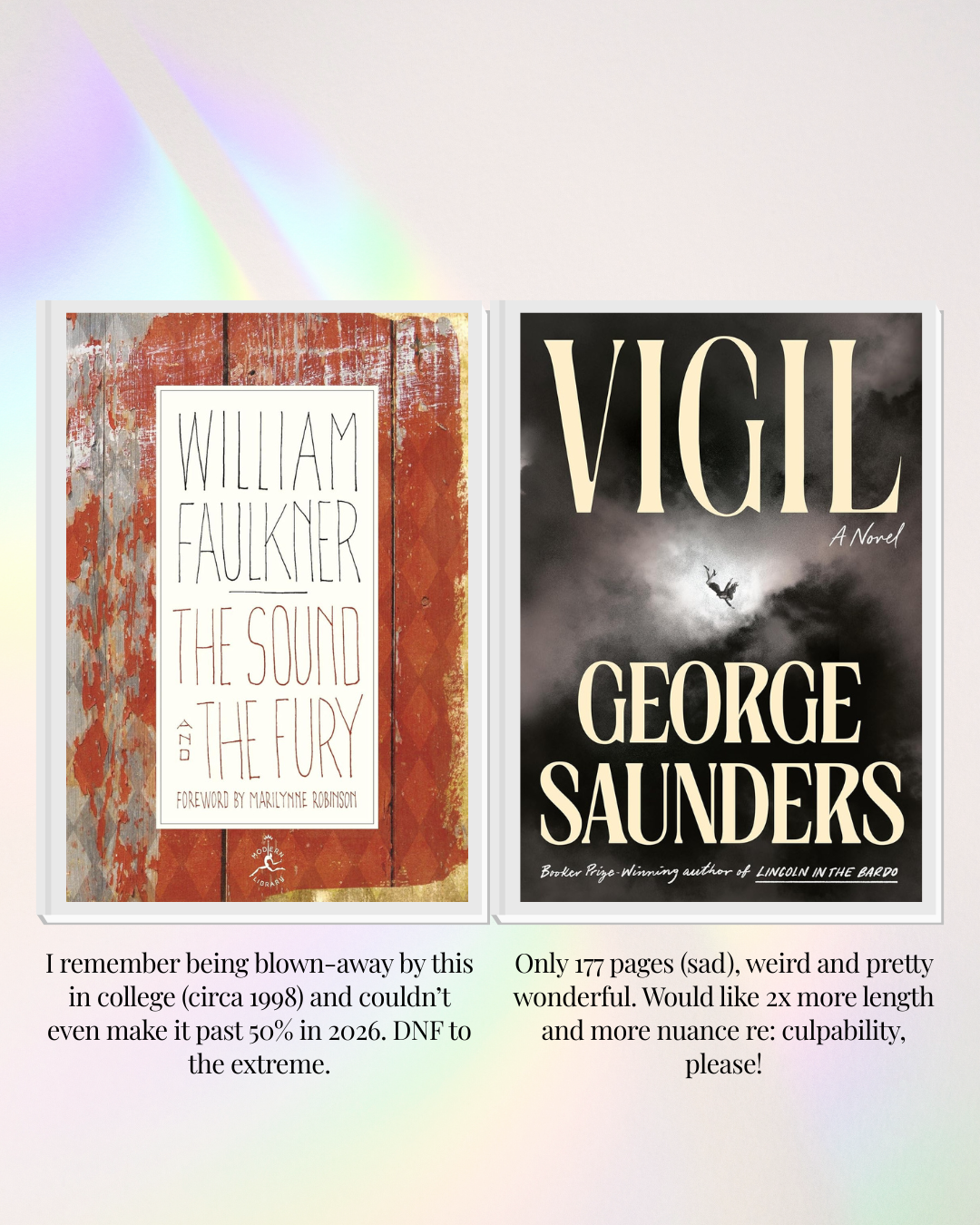
I hadn’t read all of Lincoln in the Bardo before reading George Saunders’ Vigil but the themes sound very similar: souls stuck in the afterlife, redemption and grace.
I read a lot of William Faulkner as an English major in the 1990s, and recall his works all featured gothic Southern families like in The Sound and the Fury (note: I had to DNF my re-read so hard.)
These authors are not writing identical books, to be clear. But often the obsessions between books don’t change. As a reader, this is excellent because you know what you’re getting when you pick up a book by an author known for “happy ending romances” or “complicated female protagonists.”
As a newbie writer, it’s a relief to know obsessions can carry over multiple works. And sometimes the “muse” has different ideas in mind for the story. Turns out you can lawyer the process, but you can’t lawyer the magic, and the magic is the whole point.
What matters most, it seems to me, is to combine the lawyerly rigor of getting stuff done with the magic of being open to ideas and this together (eventually) creates finished, publishable work.
At least I hope so. :)
CURRENTLY READING: I am re-reading Yesteryear and listening to Famesick on Spotify. I feel very much of the zeitgeist and SO grateful to be Gen X lawyer non-internet person. :)
CURRENTLY WATCHING: I just finished Scrubs 1-8 OG and the reboot on Hulu. My heart is full! What a sweet show with the best season finale ever. I love work friendships/families!